Creating and launching a clothing line seems like an awesome idea at the beginning. You have ideas, designs, and perhaps a powerful vision for your label. But get real and start developing those ideas into products, and it becomes complicated very quickly.
The majority of fashion startups find their holding place in the same issue production.
This is where a Cut and Sew manufacturer comes in. It's the way by which raw material paper provides your full and final style.
But in this guide, we'll get down and dirty about it, explaining how it works, what to expect, and how fashion brands actually get clothes made.
Cut and Sew Manufacturing: What is it?
Cut and sew is a process of making clothing from raw fabric, with the entire process from start to finish being referred to as manufacturing.
Nothing is pre-made; instead, using blank shirts or blank hoodies, all are served according to a custom design.
This means the fabric, fit, stitching style, and complete design are left up to you!
Consider how you want to build a house rather than purchase an apartment. This is the main difference.
Working Principle of the Cut and Sew Manufacturing: Step-by-Step
Now let's take a look at what really happens in factories.
1. Design Concept
There is a startling beginning: An idea.
Brands communicate sketches, pictures, ideas, dimensions, etc. It's still conceptual at this point; there's nothing actually built, yet these are the ideas of where the end product ought to be headed.
2. Tech Pack Creation
Like fashion, a Tech Pack is somewhat of a blueprint for your garments.
Measurements, fabric details, stitching instructions, where the label goes, trims, and accessories. If you don't have a tech pack, your production is at risk as manufacturers don't have clear instructions to follow.
3. Pattern Making
Patterns are used to form your garment.
This will determine the fit of the clothes and scaling, as well as the cutting and fabric orientation. Whilst perfuming the product is very important, the pattern accuracy is just as significant, as an error here could impact the quality of the final product.
4. Fabric Sourcing
The manufacturer has the choice of fabric based on your design.
The most popular materials are: cotton, fleece, jersey, denim, and blends. The quality of the fabric you use directly affects the quality of your brand, their comfort, and your product value.
5. Sample Development
A sample is created before mass production.
This aids brands in checking fit, stitching, the texture of fabric, and design precision. Most brands vary in sample revision anywhere from 1-3 times before they are approved for final production to make sure it's exactly what they need.
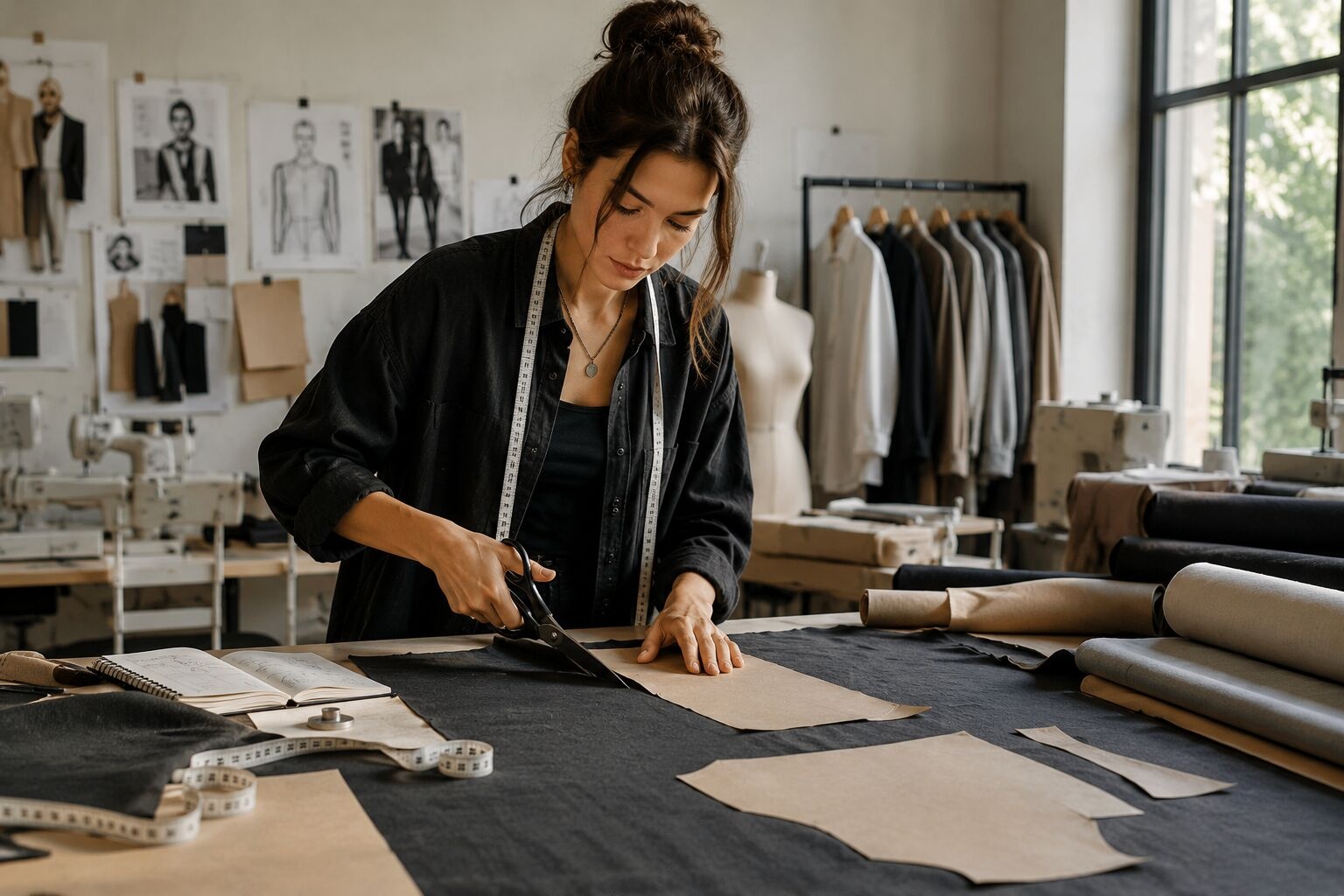
6. Cutting Process
After confirming the sample, bulk fabric cutting is done.
The degree of accuracy here is of the utmost importance, as each component needs to be exactly of the same size and quality as the pattern to ensure uniformity in size and quality of garments.
7. Sewing & Assembly
Fashion pieces are fabricated in whole clothing by means of the method of sewing cut fabric.
This involves stitching in panels, adding labels, applying trims, and embroidery printing or embroidery if necessary. This is the time when your product now has real flesh and becomes a real cloth.
8. Quality Control
All the stitching, sizes, fabrics, and finishing are verified per piece. All good manufacturers never forgo this process as it guarantees that only top-quality products would proceed to the customer.
9. Finishing & Packaging
Final clothing is trimmed, pressed, folded, put together, and ready for delivery. You have now completed your product's development, which means it's ready for market and distribution.
Cut and Sew, Private Label, and Print-on-Demand: What's the difference?
Here, many new brands get mixed up.
Cut and sew is a term that refers to a process that can fully customize garments that are manually made, resulting in high-quality products with strong control of brand, but it can take longer to produce. Private label manufacturing refers to using pre-made base products, with your logo added on; this manufacturing is faster but with less customization. Print on demand is inventory-free and low budget initially; however is low quality control and fewer branding possibilities.
CUT & SEW is the most robust solution to create a luxury fashion brand.
Benefits of Cut and Sew Manufacturing
There are many benefits to cut and sew manufacturing, but one of the greatest is complete customization. Controlled by you - fabric, fit, stitching, and design let you have creative freedom.
It also contributes to building a strong brand identity as your products are unique rather than generic blanks. This uniqueness enhances customer perceptions and the value of brands.
One of the other big advantages is that you can select materials and production standards, resulting in improved quality control. This also results in higher profit margins as the quality of the product can be increased in the open market.
Last, cut and sew provides for scalability. After the design is rehearsed and approved, the design can be consistently replicated in greater quantities without diminishing function and form.
Some challenges you need to be familiar with:
Cut and sew manufacturing is a potent process and comes with challenges.
One major drawback is the initial price due to the fact that it is all hand-created from scratch. It is also a longer process to produce as many steps are involved in sampling and making revisions, and then getting approvals.
There's also technical preparation, which involves ensuring that tech packs are kept accurate and clear communication is provided to ensure success in production. With them, errors can be easily made.
There is also sampling, which involves analysis of the initial samples, as the first one tends to be deviant from the expectations, hence there are revisions in the brands.
Cut & Sew Manufacturing- Who Should Use It?
This approach works best for startup fashion brands, streetwear brands, luxury clothing brands, clothing brands for influencers, and clothing brands for e-commerce. When it comes to branding, uniqueness, and long-term growth, that's the manufacturing that's for you.
How to Choose the Right Manufacturer
Expert checks should be performed before that particular manufacturer is selected, which should include their experience in the kind of product you want, the quality of their samples, communication speed, MOQ requirements, production location, and work that has been produced for former customers. A good manufacturer is not someone who is merely manufacturing clothes, but someone who satisfies your brand-building needs as your partner.
Final Thoughts
Cut-and-sew isn't simply a method of manufacturing; it's the whole key to folding an actual style model.
It certainly offers complete control over design, quality, and branding, as well as the proper preparation and manufacturing partner.
If not performed properly, it can go from a mere concept to a full-scale fashion label that's prepared for the market.





Interesting article - great read thank you