"The question isn't who funds this now - it's how capital enters and exits over time."
Nature finance is often discussed in terms of investment gaps, capital mobilisation and new financial instruments.
But what if one of the most important questions is not how much capital is available, but how it moves?
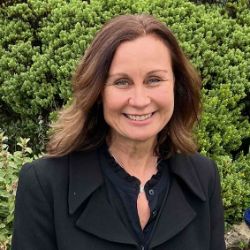
In the fifth perspective from Gerana's Making Money Work for Landscapes series, Edit Kiss, Co-Founder of Capital Continuum Advisors and Advisory Director at Finance Earth, reflects on a career spent working at the intersection of carbon markets, impact investing and nature-based solutions.
Drawing on more than two decades of experience, Edit explores a challenge that is both practical and often overlooked: finance rarely arrives all at once.
Projects, businesses and landscapes typically require different forms of capital at different moments. Grants, catalytic capital, carbon revenues, concessional finance and commercial investment all play different roles. The challenge is not simply attracting finance, but understanding how these different forms of capital interact over time.
At the heart of the article is a simple proposition:
Finance is a journey.
Rather than asking, "Who will fund me now?", Edit encourages us to ask:
"What types of capital need to enter - and exit - at different moments to sustain the journey?"
This perspective leads naturally to the idea of sequencing and layering capital. Different investors have different expectations, risk tolerances and time horizons. Successful projects often depend on finding the right combination of funding sources and structuring them in ways that allow each to play its role.
An important theme running through the article is integrity.
Much attention is rightly given to the integrity of carbon projects, biodiversity outcomes and measurement systems. But Edit argues that integrity must also extend to the financial structures themselves. Governance, benefit-sharing, permanence and the fair allocation of value between investors and landscape stakeholders are equally important considerations.
Throughout the piece, she offers a practical reminder that, along with raising capital, landscapes must also build the capital stack. Different forms of finance are needed at different moments, each bringing its own expectations, risks and opportunities. The challenge is to sequence and connect these sources of funding in ways that support both early-stage innovation and long-term resilience.
For anyone working at the intersection of nature, finance and landscape resilience, Edit offers a useful reframing: perhaps the question is not whether enough capital exists, but whether we are designing the pathways that allow different forms of capital to work together effectively over time.
This article is the fifth in a six-part series exploring how money behaves inside the systems shaping landscapes.
We hope it sparks reflection, discussion and perhaps a few new questions of your own.
Further reading:
MMW Perspective 5: Finance as a Journey - Sequencing Capital Over Time, by Edit Kiss (attached).
PDF Resource






Comments
( 0 comment )
Please login to leave a comment.