
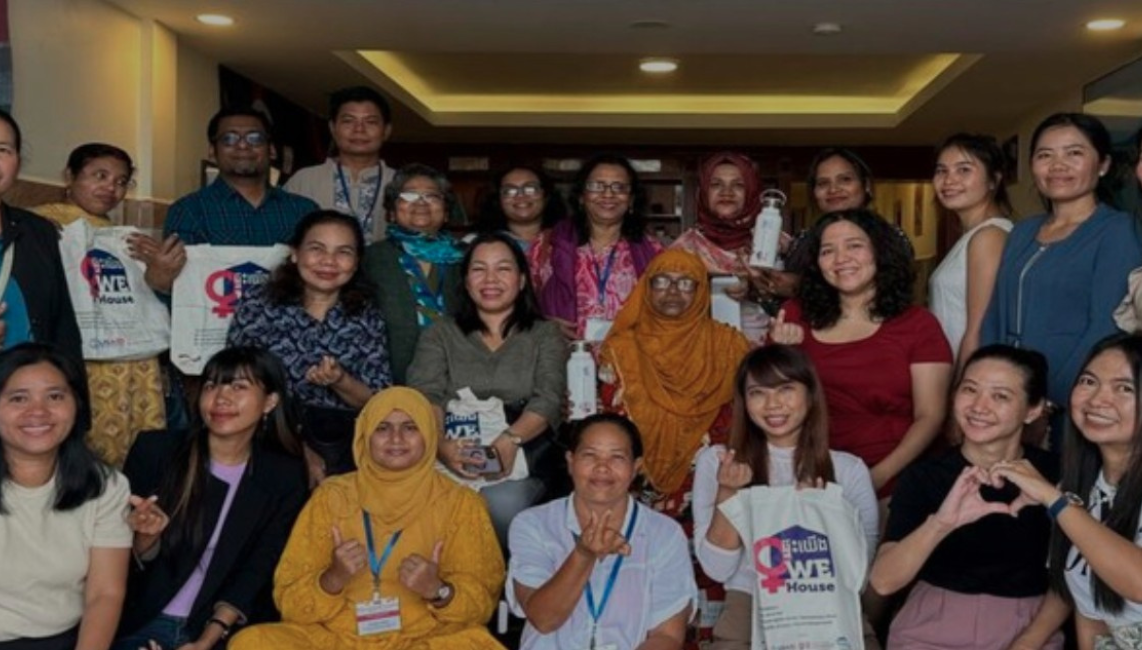
Awareness raising workshops, skills training and peer learning offer women the opportunity to develop their skills and participate in improving their working conditions - the benefits of facilities such as a women's café are clear, especially for women textile workers. An interview with Maly Man, WE House Lead.
Who is behind the WE House initiative?
The Women Empowerment House (WE House) in Cambodia, was established in 2021 as a joint initiative by the GIZ project FABRIC, Solidarity Center, and Women Union Network (WUN) in order to support women textile workers in Cambodia. In Bangladesh and Myanmar these places have been offered through establishing Cafés and Centers for women workers with the aim of capacitating them to know and claim their rights.
How does WE House contribute to the empowerment of women workers, and what role does it play in enhancing their skills and knowledge for both professional and personal growth?
Awareness raising workshops, skills training and peer learning serve as an opportunity for these women to build their capacities and getting involved in improving their working conditions. The Centers act as catalyst to empower the women workers personally and professionally. The three most important services for its employees are training, counseling and an exchange café. These services aim to empower and support workers who are facing various challenges in their lives. WE House has already helped many employees achieve their goal. As of 2023, we have expanded the services we offer by providing digital and language training during the week to support employees' professional development. In addition, we have set up a library where employees can improve their Khmer skills to relax while reading and beyond.
How does WE House address the issue of sexual harassment in the workplace, and what counseling services are offered to support women workers facing such challenges?
At WE House, addressing sexual harassment in the workplace is a multi-faceted approach encompassing prevention and support measures. To prevent such incidents, the organization conducts sexual harassment prevention training, empowering Women Union Network members to further extend the training within their federations. Similarly, WE House provides training directly to its workers, enhancing their ability to recognize and report instances of harassment. Ongoing awareness initiatives, including Sunday training sessions and campaigns for Women Rights Day and the 16 Days Campaign, play a crucial role in keeping the issue in focus, fostering a culture of respect, and actively working towards ending violence against women.
In terms of support, WE House is committed to the well-being of its workers facing such challenges. The organization offers psychological counseling services, acknowledging the emotional impact of harassment and providing a supportive environment for individuals to cope with these difficulties. This comprehensive approach reflects WE House's dedication to creating a workplace that prioritizes the safety, well-being, and empowerment of its women workers.
How does WE House measure the success of its programs in terms of enhancing women workers' rights, improving working conditions, and promoting gender equality, and what impact has it observed since its establishment?
We have observed that women workers who come to WE House express an intention to return and access the services again. However, as WE House welcomes workers from all factories in Cambodia, specificly in Phnom Penh. Conducting a study to measure the success of the program in terms of improving working conditions and promoting gender equality is still a learning process.

-
How Daily Training Can Transform Women Workers' Lives
OpenWE House offers weekday and Sunday trainings for workers conducted by WE House partners and the Women Union Network (WUN). Topics such as labor law, gender, sexual harassment, women's empowerment, ILO Convention C-190, social protection, pension insurance, financial literacy, health education, stress management are covered.
Enhanced Labor Rights Awareness: WE House educates workers about their type of employment contract, maternity leave and payment, labour dispute resolution, labour law app, occupational and health benefit national safety security fund (NSSF), role of union in protecting worker’s right.
Boosted Productivity: Workers who understand their rights and responsibilities tend to be more engaged and productive. They are also more likely to follow safety regulations and contribute positively to the work environment.
Reduced Absenteeism: When workers have access to support services like counseling and health education, they are less likely to experience stress-related illnesses and personal problems that lead to absenteeism.
Reduced Gender-Based Issues: WE House tackles gender-based issues at work with awareness events and training, boosting morale, retention, and building a safer, fairer environment for everyone.
Stress Management and Mental Health Support: WE House provides access to counseling and other support services that can help workers manage stress and maintain their mental health.
-
How To Create A Safe Space For Women Workers
OpenWE House provides a safe space for female workers by creating a supportive environment to discuss work-related and gender-specific issues and access support services. They offer key services:
- Sunday training
- Weekday training
- Counselling training
- Exchange Café
- Library
-
How To Promote Workplace Equality and Social Responsibility Through Programs
OpenSafe Space for Female Workers
Support groups where female workers can discuss challenges, gender-specific issues, and find solidarity with peers.
Training and Awareness Programs
- Sunday training: Focused on labor rights, gender equality, and sexual harassment.
- Weekday training: Broader skill development for well-being and economic potential.
- Counseling training: Empathetic counseling support for emotional well-being.
- Exchange Café: Peer-to-peer learning platform to share experiences and best practices.
- Awareness campaigns: Events like Women’s Rights Day and 16 Days of Activism against Gender-Based Violence.
Social Responsibility
- Partnerships: Collaborations with NGOs, government agencies, and other organizations.
- Advocacy: Policy change and legislative support for equality and worker protection.
- Sustainability: Building a financial model for long-term impact.
-
How to Support as an External Organization
Open- Safe transport: Fund workers’ safe transport to WE House events.
- Access to your priority topic: Peer educator or training on chosen topics at WE House or factories.
- Customized training: Content delivered at WE House or factories, tailored to partner needs.
-
How To Organize and Customize Training Sessions
Open1. Needs Assessment and Goal Setting
- Partner collaboration to define priorities.
- Worker input via surveys/focus groups.
- Alignment with partner goals.
2. Content Development and Delivery
- Modular design for flexibility.
- Interactive learning methods.
- Local context with real-life scenarios.
3. Trainer Selection and Support
Select trainers with subject expertise and adult education experience, ideally with knowledge of the garment industry.
4. Monitoring and Evaluation
Regular feedback and impact assessment to measure knowledge, skills, behavior, and well-being.
5. Tailoring for Partner Organizations
Adapt training content to partner objectives; encourage joint development for ownership and alignment.
Editor's note: Originally published on 7th February 2024 as part of the Asia Garment Hub. Visit the Cambodia Hub for more resources.





Comments
( 0 comment )
Please login to leave a comment.