
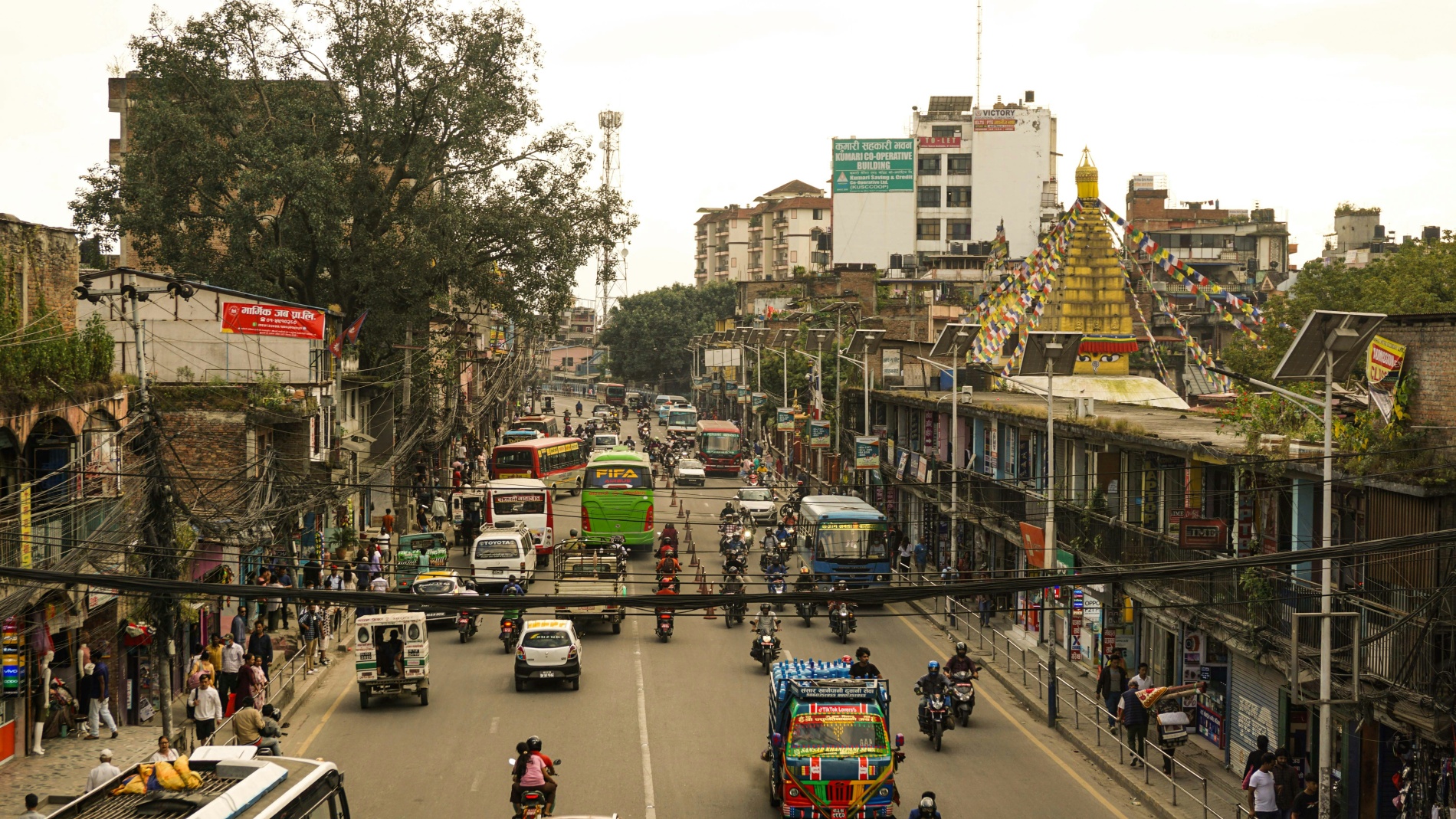
In September 2025, protests led mainly by young people escalated into nationwide unrest and resulted in the dissolution of Nepal’s government. This article provides a brief overview of what happened and how it affected Purnaa, a Fair Trade manufacturer based in Kathmandu.
What were the Gen-Z protests?
On 8 September 2025, thousands of young Nepalis gathered near the federal parliament to protest a government ban on 26 social-media platforms and wider concerns about corruption, inequality, and lack of opportunity. Police responded with tear gas, water cannons, rubber bullets, and later live ammunition. At least 76 people were killed and many more were injured across the country.
In the days that followed, major government buildings, including the parliament complex and several official residences, were set on fire. The then-Prime Minister resigned soon after, and an interim government was appointed.
How were people affected?
The deaths of young people caused outrage and grief throughout the country. The situation created widespread uncertainty and fear. The Nepal Army was deployed to bring back order and curfews were enforced nationwide, echoing the restrictions experienced during COVID-19 lockdowns. Many government officials’ homes and public buildings were burned down, and because these areas are densely populated, entire neighbourhoods experienced smoke, disruption, and safety concerns.
How did the protests affect export manufacturing?
The manufacturing sector faced varied impacts depending on location, supply chain structure, and access to transport. The impacts lasted for about 5 days total.
Airport closures halted international cargo for two days, delaying exports.
Movement restrictions limited workers’ ability to reach factories.
Safety concerns led many companies to pause operations temporarily.
Logistics and domestic transport were slower due to road checkpoints and curfews.
At Purnaa, administration staff worked from home for nearly a week, while production staff were unable to work. Team members reported rioting and smoke in their neighbourhoods from fires set during the unrest. Team leaders would check in on staff safety and needs daily. Once authorities signalled improved security, the factory reopened with adjusted schedules and safety checks.
Because the airport reopened quickly, long-term export delays were minimal. Many customers contacted us to check on staff safety and offer support.
Expected long-term impacts
Nepal is preparing for new elections, and the events of 2025 have created lasting political and social shifts. Public trust in institutions is tenuous, and communities are still processing the effects of the violence and instability. The full impact on economic growth, investment, and manufacturing will continue to unfold over the next year.
The role of Fair Trade businesses during a crisis
Periods of political instability highlight the importance of stable and supportive workplaces, especially in contexts where public welfare systems are limited and political trust is weak.
During the protests, our employees required support for stability, communication, information and reassurance.
At Purnaa, we focused on:
Prioritising staff safety by shifting to remote work and monitoring local conditions.
Providing clear and consistent communication so team members knew what to expect.
Offering emotional and practical support, recognising that many families were directly affected.
Maintaining stability in employment, wages, and schedules as soon as it was safe to do so.
Fair Trade principles emphasise security, dignity, and long-term development. In moments of national crisis, these commitments become even more important. While we cannot control external events, we can aim to provide a workplace where people feel supported, valued, and able to plan for their future, even during uncertainty.
By working with Fair Trade businesses, brands can help strengthen local communities through stable, long-term orders and reliable employment.
Looking to the future
The protests have left many people in Nepal feeling uncertain about what comes next, with concerns about losing fundamental rights and freedoms, as well as the possibility of more riots, protests, and curfews. The power imbalance remains an ongoing concern, and there is a noticeable apathy among some who feel too preoccupied with personal matters or remain aligned with traditional political parties.
Alongside these fears, there is a strong undercurrent of hope for a better Nepal. Many are eager for improved governance, better education, increased employment, and less corruption. While some are skeptical about the fairness and peace of upcoming elections, others express optimism that things will eventually improve, believing that positive change is possible if the collective will to move forward remains strong.
In this period of uncertainty, Fair Trade employers play a vital role by providing stability, ethical practices, and hope for a more just and resilient future in Nepal.
To find out more about Purnaa or to get in touch with us, go to: www.purnaa.com





It's inspiring to hear how Purnaa have been managing through adversity. Keep up the good work.